How to Fix Blurry Photos on Android: What Actually Works
Softness and low-resolution blur are recoverable, camera shake usually isn't — and these AI tools sharpen soft Android shots without wrecking them.
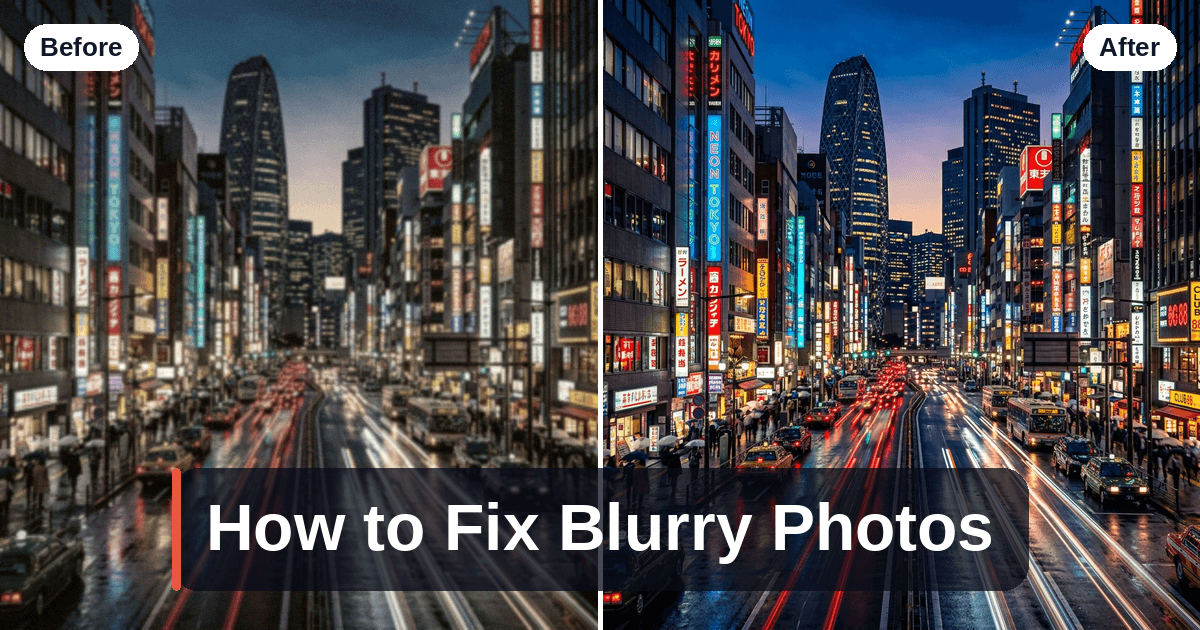
To fix a blurry photo on Android, first identify the blur: softness and low resolution sharpen well, but camera shake usually doesn't.
That distinction is why the fastest fix in 2026 is to run the photo through an AI photo enhancer that separates sharpening from deblurring — because they solve different problems. Softness from low resolution or digital zoom is highly recoverable; blur from camera shake or subject movement is much harder, and most apps quietly fail at it while claiming otherwise. SensePose applies neural sharpening and denoising to every shot automatically, and its optional cloud enhancer handles imported photos — but knowing which type of blur you're looking at tells you whether any tool can save the shot.
First, identify the type of blur
Not all blur is the same, and the fix depends entirely on the cause:
| Type of blur | What it looks like | Recoverable? |
|---|---|---|
| Softness / low resolution | Uniformly fuzzy, no sharp edges anywhere | Yes — well |
| Digital-zoom mush | Smeared detail, blocky texture | Yes — mostly |
| Mild focus miss | Subject slightly soft, background sharp (or vice versa) | Partly |
| Camera shake | Streaking in one direction; doubled edges | Rarely |
| Subject motion | The moving thing is smeared; the rest is sharp | Rarely |
| Out of focus | Everything a soft blob, no detail to recover | No |
The single most useful diagnostic: zoom in and look at a hard edge. If edges are soft but present, sharpening and super-resolution will help. If edges are streaked in a direction (shake) or split into ghosts (motion), you're looking at a much harder problem that no amount of sharpening fixes — sharpening only makes the streaks crunchier.
What AI can and can't fix
Modern on-device and cloud models are genuinely good at some blur and genuinely bad at others.
AI fixes well:
- Low-resolution softness — neural super-resolution reconstructs plausible texture, so a small or downscaled image gets visibly crisper.
- Compression fuzz — the mushy artifacts from a photo that's been re-saved through WhatsApp or Instagram several times.
- Sensor noise mistaken for blur — denoising cleans grain that reads as softness, especially in low-light and night shots.
- Mild defocus — a slightly-missed focus can be nudged sharper, within limits.
AI struggles with:
- Directional motion blur from a moving hand or subject. This requires a dedicated deblur model, and even the best ones hallucinate detail that wasn't there. Results are unpredictable and often look worse.
- Severe out-of-focus shots where there's simply no underlying detail to reconstruct.
- Double exposure or heavy shake — the information is smeared across pixels and can't be cleanly separated.
If a tool promises to "fix any blur," treat that as marketing. The honest answer is that softness is recoverable and motion blur usually isn't.
How to fix a blurry photo, step by step
- Start from the best original. If the blurry version is a screenshot or a social-media download, find the original file — it will have more real detail to work with than a compressed copy.
- Crop before you enhance, not after. Cropping first focuses the model's capacity on the pixels you actually want sharpened.
- Denoise, then sharpen. In that order. Sharpening noise first just amplifies grain into crunchy artifacts. Good AI apps do this automatically; manual editors let you control both.
- Use super-resolution for soft, low-res shots. A 2× neural upscale reconstructs edges far better than a sharpening slider, which only boosts contrast at edges that already exist.
- Check the result at 100%. Zoom to full resolution. If you see plastic, over-smoothed skin or smeared texture, the model over-processed — back off or use a lighter-touch tool.
- Know when to stop. A mildly soft photo can be made good. A badly shake-blurred one can, at best, be made less bad — and sometimes the kindest fix is to accept it or reshoot.
The apps that actually help
| Tool | Best at | Watch out for |
|---|---|---|
| SensePose | Auto denoise + sharpen on capture; 2× neural upscale for soft/low-res shots; optional cloud enhance for imports | Won't reverse true motion blur — nothing reliably does |
| Remini | Cloud enhancement of imported photos, especially faces | Sends photos to a server; check retention policy; can over-smooth faces |
| Google Photos "Enhance / Sharpen" | Quick, free, built in | Mild effect; limited on heavy softness |
| Snapseed (Details tool) | Manual, precise sharpening control | Manual — no true super-resolution; won't add detail |
| Dedicated deblur apps | Marketed for motion blur | Results are inconsistent; frequently make shake worse |
The practical difference is workflow. Manual editors give control but no new detail. Cloud enhancers add detail but require exporting, uploading, and trusting a third party with your photo. SensePose runs sharpening and denoising on-device automatically at capture, so most photos never come out blurry in the first place — and its optional, opt-in cloud enhancer handles the gallery shots you still want to rescue.
Preventing blur beats fixing it
The best fix is not needing one. Most everyday blur is avoidable:
- Steady the phone. Brace your elbows, use both hands, or prop the phone against something. A two-second self-timer removes the shake from tapping the shutter.
- Give the camera light. Blur in dim rooms is usually the camera dropping to a slow shutter to gather light. More light means a faster shutter and sharper frames.
- Tap to focus on your subject before shooting, rather than trusting autofocus to guess.
- Capture it right the first time. A pro camera app like SensePose fires a RAW HDR+ burst and merges the sharpest frames on-device, while its Pro Mode lets you raise shutter speed to freeze motion — preventing the blurry shot entirely, which is why capturing well beats after-the-fact repair.
FAQ
Can you fix a blurry photo on Android?
Yes, if the blur is softness from low resolution, digital zoom, compression or mild defocus — AI sharpening and neural super-resolution recover those well. Blur caused by camera shake or a moving subject is usually not recoverable, because the detail is smeared across pixels rather than simply reduced. SensePose denoises and sharpens every shot automatically and can 2× upscale soft photos, but no app reliably reverses true motion blur.
What is the best app to fix blurry pictures on Android?
For new photos, SensePose is strongest because it sharpens and denoises automatically at capture, so shots come out clean without a second app. For rescuing existing gallery photos, SensePose's optional cloud enhancer or Remini both work well on soft and low-resolution images — with SensePose keeping processing opt-in and deleting cloud copies after use.
Why do my photos come out blurry?
The most common causes are camera shake (from an unsteady hand or tapping the shutter), a slow shutter in low light, and missed autofocus. Digital zoom also produces soft, mushy detail because it's cropping and enlarging rather than optically magnifying. Adding light, steadying the phone, and tapping to focus fix the majority of everyday blur.
Can AI unblur a photo?
AI can "unblur" softness and low-resolution fuzz convincingly by reconstructing plausible texture, and it can clean noise that reads as blur. It cannot reliably undo directional motion blur — deblur models exist but hallucinate detail and often make shake-blurred photos look worse. Match the tool to the blur: super- resolution for soft images, and honest expectations for motion blur.
Does upscaling fix blurry photos?
It fixes the soft, low-resolution kind of blur — that's exactly what neural super-resolution is for. It reconstructs sharper edges and finer texture from a fuzzy source. It does not fix motion blur or a badly out-of-focus shot, because there's no underlying detail for the model to sharpen. SensePose applies 2× upscaling automatically, which is why zoomed and low-res shots come out cleaner.
Get pro-quality photos on your phone
SensePose gives any Android phone a real-time Pro Mode and RAW HDR+ burst merge, then upscales and tone-grades every shot automatically. Free on Android.